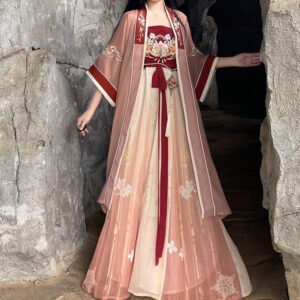
Tang Dynasty Hanfu
Tang Dynasty Hanfu (618-907)
Tang dynasty clothing is the most colourful and romantic period in Chinese dress history. Where Ming clothing is structured and Song clothing is restrained, Tang dress is expansive: high waists, open collars, layered scarves and a cosmopolitan mix of influences from the Silk Road.
What makes Tang clothing distinctive
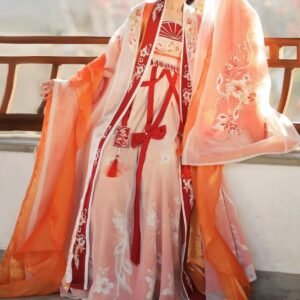
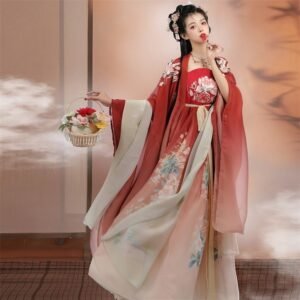
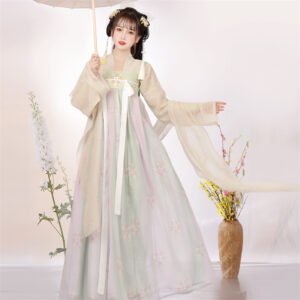
Chest-high skirts (qixiong ruqun). The skirt is tied under the bust, creating a long, high-waisted line. This is the single most recognisable Tang silhouette.
Hezi skirt. A strapless chest band worn with a short jacket or a sheer outer layer, typical of mid-to-late Tang fashion.
The pibo scarf. A long, narrow scarf draped over the shoulders and arms, giving Tang outfits their flowing line.
Open collars and wide sleeves. More skin and more sleeve volume than in later dynasties.
Rich colour. Reds, greens, golds and strong contrasts, often with floral or bird patterns.
How to wear Tang hanfu today
The chest-high silhouette is flattering on many body types because it does not depend on the natural waist. Wear it with a pibo scarf for a full Tang look, or with a simple blouse for a modernised version. Flat shoes or embroidered cloth shoes suit the silhouette.
Tang pieces in our collection
Our Tang selection focuses on chest-high silhouettes and embroidered sets. Start with the Tang dynasty hezi skirt set, the chest-high set with kezi skirt or the chest-high cross-collar dress. For more chest-high options, see the hanfu dresses collection.
Tang vs Ming vs Song
Tang: high waist, colourful, open collar, layered scarf. Ming: stand collar, structured shoulders, horse-face skirt. Song: narrow silhouette, soft colours, long beizi jacket. Read our Ming dynasty guide and Song dynasty guide for comparison.
Showing all 5 results
- Hanfu Dresses
Chest-High Hanfu Dress – Lightweight Cross-Collar Robe
Price range: $211.77 through $213.86 Select options This product has multiple variants. The options may be chosen on the product page - Hanfu Sets and Two-Piece Outfits
Chest-High Hanfu Set – Kezi Skirt and Flowing Robe
Price range: $149.52 through $149.94 Select options This product has multiple variants. The options may be chosen on the product page - Best Sellers
Chest-High Hanfu Skirt Set – Elegant Two-Piece
Price range: $76.52 through $77.35 Select options This product has multiple variants. The options may be chosen on the product page - Hanfu Dresses
Full-Embroidery Hanfu Dress – Retro Chest-High Silhouette
Price range: $86.55 through $87.10 Select options This product has multiple variants. The options may be chosen on the product page - Hanfu Sets and Two-Piece Outfits
Tang Dynasty Hezi Skirt Set – Embroidered Chest-High Hanfu
Price range: $140.32 through $178.09 Select options This product has multiple variants. The options may be chosen on the product page